Aluminum Vs Fiberglass Boat: Which is Better for Your Boating Needs?
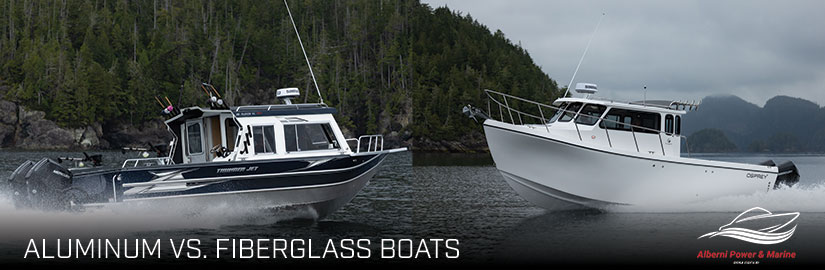
What is a better way to spend your free time than hitting the waves? Finding the right hull material, however, isn't always easy for many prospects. New and experienced boaters alike often ask the same question: Should I buy an aluminum boat or a fiberglass boat?
The main factor to consider is your boating needs.
Before looking at boats for sale, think about where you will use the boat, how often you will tow it, the type of water you expect to encounter, how many people will normally be on board, and whether the boat is primarily for fishing, family cruising or a combination of both.
In this blog, we’ll look at the comparison of aluminum and fiberglass boats. This will help you choose the right vessel for your upcoming boating trips.
Aluminum vs. Fiberglass Boats : Comparison at a Glance
Consideration |
Aluminum |
Fiberglass |
| Weight | Generally lighter for a comparable boat size | Generally heavier for a comparable boat size |
| Hull Construction | Welded or riveted aluminum alloy | Fiberglass laminate with gelcoat finish |
| Impact Response | Dents are more common; serious damage depends on the impact | Gelcoat can chip or crack; significant impacts can require fiberglass repair |
| Typical Deadrise | Commonly around 10°–20°, depending on hull design | Often around 18°–24° on offshore-oriented deep-V boats |
| Towing | Lower boat weight generally makes towing easier | Greater hull weight requires more towing capacity |
| Maintenance | Wash, inspect and address corrosion, dents and fittings | Wash and inspect; gelcoat benefits from periodic waxing/polishing |
| Fishing Layouts | From open utility/Jon boats to larger fishing and offshore configurations | Centre-console, pilothouse and larger fishing/cruising layouts |
| Cabin Options | Available, particularly on larger models | Wide range of enclosed cabin and overnight layouts |
| Typical Size/Length | Utility and small fishing boats commonly range from 12-18 feet, while larger fishing and pilothouse models typically range from 18-28 feet or more. | Bowriders and family runabouts commonly range from 16-25 feet; freshwater fishing boats from 16-22 feet; and centre-console, dual-console, and larger offshore fishing boats from approximately 18-28 feet or more. |
Aluminum Vs Fiberglass Boats
Visit a boat dealer, and you’ll find plenty of reasons to choose aluminum, just as you’ll find many reasons to choose fiberglass. Neither material is simply “better” than the other. Many factors shape the right choice.
A boat used mainly for fishing and frequent launching may have different requirements from one used for offshore trips, family cruising, or overnight stays.
Why Choose an Aluminum Boat?
Aluminum boats are popular among anglers, working boaters and owners who regularly launch, tow and operate their boats in shallow, rocky, or other demanding waters.
One of the biggest advantages of this material is weight. Aluminum construction generally produces a lighter boat than a comparable fiberglass design. That makes a difference when you are towing, launching, loading and moving the boat around the marina or boat ramp.
A lighter hull also puts less load on the towing vehicle and requires less power to get the boat moving. Depending on the hull design, engine, load and operating conditions, that can translate into useful fuel and performance advantages.
Benefits of Aluminum Boats
- Aluminum Boat Handles Impacts Differently
One of the biggest differences between aluminum and fiberglass appears when the hull takes an impact.
Aluminum is more likely to dent from a hard impact. Fiberglass is more likely to develop cracks or other damage under a significant impact.
That does not mean an aluminum hull is immune to damage by default. Welds, fittings, transoms and structural components still require inspection, and a badly damaged hull needs proper repair.
For anglers who regularly operate around rocky shorelines, shallow areas, beaches, or other places where underwater obstacles are a concern, how aluminum responds to impacts is worth considering. - Aluminum Boat Maintenance is Easier
Aluminum doesn’t have a gelcoat finish like a fiberglass boat. So it doesn't require regular polishing to maintain its appearance. It's easy to maintain with professional help.
Marine experts recommend washing the boat after every saltwater use to remove salt and other residue from the hull and other components. Regular boat inspections are also important. Check for damage, loose fittings, problems around welds and signs of corrosion. The next step is to address anything unusual before it requires a larger repair.
Regularly check electrical components, engines, steering systems and hardware for any maintenance or replacement required.
The difference is that the hull itself does not require the same type of finish maintenance as a fiberglass boat.
Transport Canada recommends keeping a pleasure craft in good working order and specifically advises owners to inspect the hull for cracks or other damage before heading out.
Exlpore Our Aluminum Boats
Types of Aluminum Boats
Available in wide range of designs, aluminum boats for sale extend from lightweight boats for freshwater fishing to larger pilothouse vessels built for coastal and offshore use. Their size, hull shape, and layout determine how they will perform on the water and which activities are suitable more for the users.
Some common categories are:
- Utility boats – built for general-purpose use like fishing, transporting equipment and working around lakes & sheltered waters, Utility boats often feature all-welded hulls, wide bottoms and layouts designed to carry people & gear.
- Jon boats – have simple, shallow-water oriented designs that suit fishing and utility use.
- Mod-V and multispecies boats – ideal for a range of freshwater and protected-water applications.
- Deep-V boats – with deeper hulls, these vessels are designed for more demanding water and improved protection from chop.
- Offshore aluminum boats – larger welded hulls built around coastal and offshore fishing, with features such as pilothouses, larger fuel capacity and higher horsepower.
APM's current range in this category gives buyers several examples of how aluminum boat designs extend beyond the basic fishing-boat format.
For example, their Port Alberni boat dealership offers the Marlon SWV18L welded utility boat with centre console and welded T-top, a 17-foot-7-inch welded aluminum boat with seating for six, wide beams & wide chine width for a great performance, room, stability, and safety.
Why Choose Fiberglass Boats?
Fiberglass offers a different set of advantages, especially for buyers who value ride characteristics, interior space, finish and family comfort.
The weight of a larger fiberglass boat can contribute to a more settled ride in open or choppy water. Fiberglass construction also gives boat manufacturers considerable freedom to shape the hull and build integrated seating, storage and cabin features as per a prospect’s custom requirements.
A fiberglass boat can easily double as a family-friendly boat. It lets you take fishing gear, water toys, family, and friends out for a day or on extended trips.
Benefits of Fiberglass Boats
- Fiberglass Boats Offer More Cabin and Layout Options
One of fiberglass's biggest advantages is the range of designs you can build into a boat. Instead of being limited to an open fishing layout, many fiberglass boats combine a fishing cockpit with an enclosed pilothouse, dinette, galley, head and sleeping accommodations.
For example, the Osprey 26 Legend boasts a 26-foot hull with a 7' x 8' cockpit, a 9' x 6'6" cabin, a full stand-up head, galley, dinette and sleeping accommodations. That gives the owner a boat that can handle a serious day of fishing but also works for family cruising and extended weekends.
Another example is the Sea Sport Kodiak 2600. At 26 feet, it has a 22° deadrise and a large self-draining cockpit. It gives anglers plenty of working space. This vessel also boasts a galley, convertible dinette, V-berth and marine head, with sleeping space for four when you decide to stay out overnight.
This is especially relevant for buyers who don't want to choose between a fishing boat and a family cruiser. Well-designed fiberglass boats for sale can combine the two. - Fiberglass Boat Maintenance
Fiberglass requires a different maintenance routine from aluminum. Wash the gelcoat finish regularly, especially after saltwater use, and wax or polish it periodically to maintain its appearance.
Scratches, stains and oxidation can develop over time and may require additional attention. After a significant impact, inspect the hull for anything more serious than surface-level gelcoat damage.
So, fiberglass is not maintenance-free. It simply requires more attention to its finished surface than an aluminum hull.
Find the right Fiberglass Boat for You
Types of Fiberglass Boats
Fiberglass boats come in several configurations, from pilothouse fishing boats to offshore and family-oriented cruisers.
- Pilothouse designs: Anglers who fish regularly in BC’s changing coastal weather value an enclosed helm for shelter from wind and rain, paired with an open cockpit for working lines and handling fish. APM offers this style through models such as the Osprey 24 Talon, 26 Legend, and 28 Endeavor that suit different space and boating requirements.
- Offshore fishing boats: Boaters who fish exposed coastal waters often look for a deep-V hull, a self-draining cockpit and protection from changing weather. Boats like the Sea Sport Explorer 2400 combines a deep-V hull and walkaround access with an enclosed cabin, galley, and sleeping space, allowing anglers to fish during the day and stay aboard overnight comfortably.
- Larger fishing and cruising boats: Owners planning longer trips prefer a larger vessel that accommodate fishing gear, meal preparation, good sleeping area, and other comfort features. The Sea Sport Commander 2800 comes with a spacious cockpit, built-in livewell with twin-outboard power option, a roomy interior with sleeps up to six, a large V-berth underneath storage, plenty of fishing space, and other comfort & fishing features.
Aluminum or Fiberglass Boats: Where Will You Use the Boat?
Shallow and Rocky Water
If you regularly operate around rocky shorelines, shallow areas or remote launches, aluminum material can be a better choice. Its low-weight structure helps with towing and launching, and its impact response is one of its major advantages.
Offshore Water
Offshore boating puts more emphasis on hull design than on whether the boat is aluminum or fiberglass. Things like deadrise, beam, bow shape, freeboard and overall weight all play a part in how the boat handles rougher water.
Frequent Towing and Launching
If you take your boat in and out of the water regularly, consider a lighter hull because it is usually easier to tow and handle at the launch ramp. Aluminum has an advantage here.
Family Cruising & Overnight Journeys
When family trips involves full days and nights on the water, cabin noise can make a real difference to comfort. Fiberglass boats such as Osprey Pilothouse and Sea Sport benefit from foam-core construction that naturally helps enjoy more silent ride inside. Aluminum boats tend to be noisier inside. Newer generation models from brands like Thunder Jet boats come with sound-dampening packages (standard on larger boats and optional on smaller models) to keep the noise down.
Repairs: Aluminum vs. Fiberglass
Both materials can be repaired, but the damage differs.
An aluminum boat can suffer dents, damaged welds or structural damage following a significant impact. Fiberglass can suffer gelcoat damage, cracks or more serious laminate damage.
A dent in an aluminum hull is not automatically a major structural problem. But important areas such as the bottom, welds and transom still need inspection. Likewise, a small fiberglass surface repair is very different from structural laminate damage.
Regardless of the material you choose, a proper post-impact inspection is important.
What Does Ownership Look Like After Several Years?
Neither material is maintenance-free.
With aluminum, you can avoid regular gelcoat polishing and waxing. However, you still need to wash the boat, inspect the hull, and watch for corrosion, fittings, and damage.
With fiberglass, routine hull care demands the same general cleaning and inspection. Also, you need to pay attention to the gelcoat finish occasionally for better upkeep.
When comparing boats, look beyond the purchase price. Engine servicing, trailer maintenance, storage, insurance, fuel, electronics, boat repowering, and other routine repairs all contribute to long-term ownership costs.
What to Look at Before Buying an Aluminum or Fiberglass Boat?
Before you make a decision, consider these 7 factors.
- Where you normally boat: Think about whether you’ll be on lakes, rivers, coastal waters or heading offshore.
- Hull structure: Look at the deadrise, beam, overall length and the shape of the running surface.
- Towing: Check the boat’s loaded weight with gear, propulsion system, etc., not just the dry weight listed for the hull.
- Fishing: Make sure there is enough cockpit and storage space, fish boxes, mounting options, rod holders, and other setup.
- Family: Consider the seating, cabin space, sleeping arrangements and a head for long and overnight trips.
- Pre-owned: Used boats need a closer look before buying. Check the hull and transom conditions. Also, make sure the engine, steering, electrical system and trailer are in good shape. Check the insurance history before you buy. An inspection by a marine professional is also a good idea while finalizing.
- Future use: Think about what you’re likely to want from the boat a few years from now.
Transport Canada also recommends buyers pay attention to the required documentation and compliance information when purchasing a pleasure craft.
Conclusion
Choosing between an aluminum and fiberglass boat depends on how, where, and how often you plan to use it. Aluminum is often a strong option for buyers who prioritize lower weight, easier towing, fishing and durability while navigating rocky rivers, shallow areas or tough offshore conditions. Fiberglass is worth considering for boaters who frequently runs through choppy bays and prefer added weight of a heavier hull, which can reduce wind drift and help experience a steadier ride.
Before buying, compare the complete boat package—not just the hull material. Consider the engine, trailer, fuel capacity, safety equipment, storage, maintenance and the type of water you plan to run. Alberni Power & Marine can help you compare the available options and find a boat that fits your boating needs. Contact their team today.
Frequently Asked Questions
Q.1. Which is better for fishing in BC, aluminum or fiberglass?
There’s a reason you see so many aluminum fishing boats around BC. They’re easy to tow, simple to launch and well suited to fishing. Fiberglass is another good option, especially when you need more comfort features than fishing.
Q.2. Should I choose aluminum or fiberglass for coastal boating?
BC’s coastline can take you from sheltered bays to exposed passages, rocky coves and shallow beach access. An aluminum boat is often a stronger choice for exploring close to shore, where its lighter weight and greater tolerance for minor impacts can be useful. Fiberglass is worth considering if your frequent trips involve crossing choppy coastal water, where a heavier, well-designed deep-V hull can help soften the ride. If you regularly beach your boat or explore shallow, rocky areas, aluminum has the edge. When your priority is ride comfort, compare deep-V models in both materials before deciding.
Q.3. Are aluminum boats cheaper to maintain than fiberglass boats?
Aluminum boats generally require less cosmetic maintenance because they don't have gelcoat to polish or wax. They still need regular washing, inspection and attention to corrosion, welds, fittings and other components, especially after saltwater use.
Q.4. Which is easier to tow and launch, aluminum or fiberglass?
If you’re towing the boat often, aluminum has an advantage simply because it usually weighs less. It’s easier on the tow vehicle and less of a chore when you’re backing down the launch ramp. Just keep in mind that the number on the hull isn’t the whole story. The engine, fuel, trailer and gear all add to the weight.
Q.5. Should I choose fiberglass boats for family cruising?
Fiberglass vessels for family cruising are preferable because many models offer enclosed cabins, seating, galleys, heads and comfortable sleeping accommodations. These layouts make fiberglass boats a good option for fishing and overnight trips with family and friends.
Q.6. Can I use aluminum boats offshore?
Yes. Aluminum boats are well-suited to offshore conditions, especially larger deep-V and pilothouse models. For offshore boating, consider hull design, deadrise, size, fuel capacity, weather protection and your boat’s intended operating conditions.
Q.7. How do I choose between an aluminum and fiberglass boat?
Start with where you boat, how you fish or cruise, how often you tow and launch, and whether you need cabin or overnight accommodations. Comparing the complete boat, engine and equipment package at a boat dealership in BC will give you a better overview.
About the Author
Brad Armstrong
Brad Armstrong, Sales Manager at Alberni Power & Marine, has been full-time in the marine industry for 20 years. His background in both sales and marine service enables him to provide practical insight into how boats and propulsion systems perform on West Coast waters. Customers looking to buy a boat rely on his experience to choose the right boat setup and enjoy more confident time on the water.