Rigid Inflatable Boats: Aluminum vs Fiberglass RIB Comparison Guide
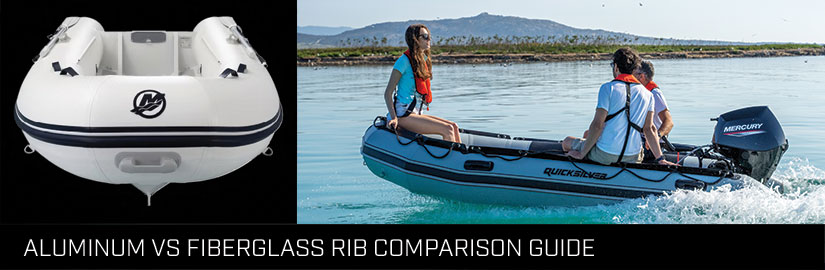
Rigid Inflatable Boats (RIBs) are popular with Canadian boaters. They combine lightweight performance, stability, and versatility, making them great for coastal cruising, fishing, or use as a tender.
Once you decide to buy a RIB, the next important question is whether to choose an aluminum or fiberglass hull.
Both types perform well on the water, but each suits different needs depending on how and where you plan to use your boat.
In this guide, we’ll cover the basics, benefits, and main differences between fiberglass and aluminum RIBs.
Understanding the Core Difference
Both aluminum and fiberglass RIBs have the same inflatable tube design. The main difference is in the material used for the rigid hull.
Aluminum RIB hulls are designed for strength, lighter weight, and durability.
Fiberglass RIB hulls are designed for a smoother ride, better finish, and added comfort.
This difference affects how the boat performs, how it feels on the water, and how well it lasts over time.
Aluminum RIBs: Ideal for Rough Conditions
Aluminum RIBs are especially popular in places like Vancouver Island, where boating conditions often change quickly.
A good example is the Quicksilver Inflatable 420 ALU RIB PVC. This compact, lightweight RIB is easy to handle, simple to transport, and built for reliable performance.
Aluminum hulls have several clear advantages:
Lighter weight, making launching and trailering easier
Better fuel efficiency, thanks to reduced overall load
Impact resistance, as aluminum tends to dent rather than crack
This makes aluminum RIBs a great choice for shallow shorelines, beach landings, and frequent use when durability is more important than looks.
Are these benefits enough to drive you to search for aluminum boats for sale near me? You should also remember that these boats do require proper care in saltwater environments to prevent corrosion, but modern coatings and build quality have significantly improved long-term reliability.
Fiberglass RIBs: Smooth, Quiet, and Refined
Fiberglass RIBs are designed for comfort and a high-quality finish, which makes them popular for recreation and family outings.
Fiberglass hulls are usually molded, which gives them several advantages:
A smoother, quieter ride
Better sound absorption, especially underfoot
A more refined look and finish
Fiberglass RIB inflatable boats for sale also tend to feel more stable at rest due to slightly higher weight, which can be beneficial for cruising or casual fishing.
These boats are easy to service at most boat maintenance providers in BC, so cosmetic and minor repairs are usually simple.
Key Differences at a Glance
Here’s a simple side-by-side comparison to help you decide:
Key Factor | Aluminum RIB | Fiberglass RIB |
Weight | Lighter – easier to launch and tow | Slightly heavier – more planted feel |
Durability | Dents instead of cracking | Can crack under hard impact |
Fuel Efficiency | Better due to lighter hull | Slightly lower efficiency |
Ride Comfort | More rigid in rough water | Smoother and quieter ride |
Maintenance | Needs corrosion care in saltwater | Easier cosmetic repairs |
Noise Level | Louder underfoot | Quieter overall |
Design & Finish | Functional and rugged | Sleek and refined |
Recommended For | Coastal, utility, fishing, shallow water use | Fishing, utility, family cruising |
Which RIB Fits Your Boating Style?
If your priority is durability, ease of handling, and real-world practicality, aluminum RIBs are a good choice. Inflatable fishing boats for sale in BC, like the Highfield Sport 420, are designed to be used often, launched easily, and handled without worry.
If you care more about comfort, quiet rides, and appearance, fiberglass RIBs provide a more polished experience on the water.
Conclusion
Both aluminum and fiberglass RIBs perform well, but each is designed for different needs.
Aluminum RIBs give you confidence in rough conditions and are great for everyday use.
Fiberglass boats offer comfort, quiet rides, and a more refined experience on the water.
Choosing the right RIB depends on how you plan to use your boat. Getting advice from a trusted boat dealer can make the process much easier.
Ready to find your ideal RIB? Contact Alberni Power & Marine today for expert advice, to compare models from Highfield and Mercury Inflatables, and to schedule a visit. Let us help you get on the water with a boat that matches your needs.
Frequently Asked Questions
Q.1. Is an Aluminum RIB Better for Rough Conditions?
Yes, aluminum hulls are highly durable and better withstand impacts, making them well-suited for rugged coastal environments.
Q.2. Are Fiberglass RIBs Quieter?
Generally, yes. Fiberglass material absorbs sound better and provides a smoother ride.
Q.3. Which RIB is Easier to Maintain?
Fiberglass is easier to repair cosmetically, while aluminum requires attention to prevent corrosion in saltwater conditions.
Q.4. Is a Lightweight RIB Better?
It depends. Lighter RIBs are easier to transport and more fuel-efficient, while heavier ones may offer a smoother ride in a rough environment.
About the Author
Stephan Zilliken
Stephan Zilliken, founder of Alberni Power & Marine and Rods Power Marine, has spent more than half his life shaping the marine industry. What began with a passion for fixing and fine-tuning boats grew into leading one of the country’s most trusted Mercury Marine dealerships. His long partnership with Mercury Marine since the mid-1990s helped establish Alberni Power & Marine as a synonym for quality and performance on Canada’s West Coast. Known for his meticulous attention to detail in powering, repowering, and service, Stephan built his reputation one boat at a time. While he no longer works as a boat mechanic, his expertise and guidance still inspire the team, suppliers, and customers who value his deep knowledge of boating and marine technology.